
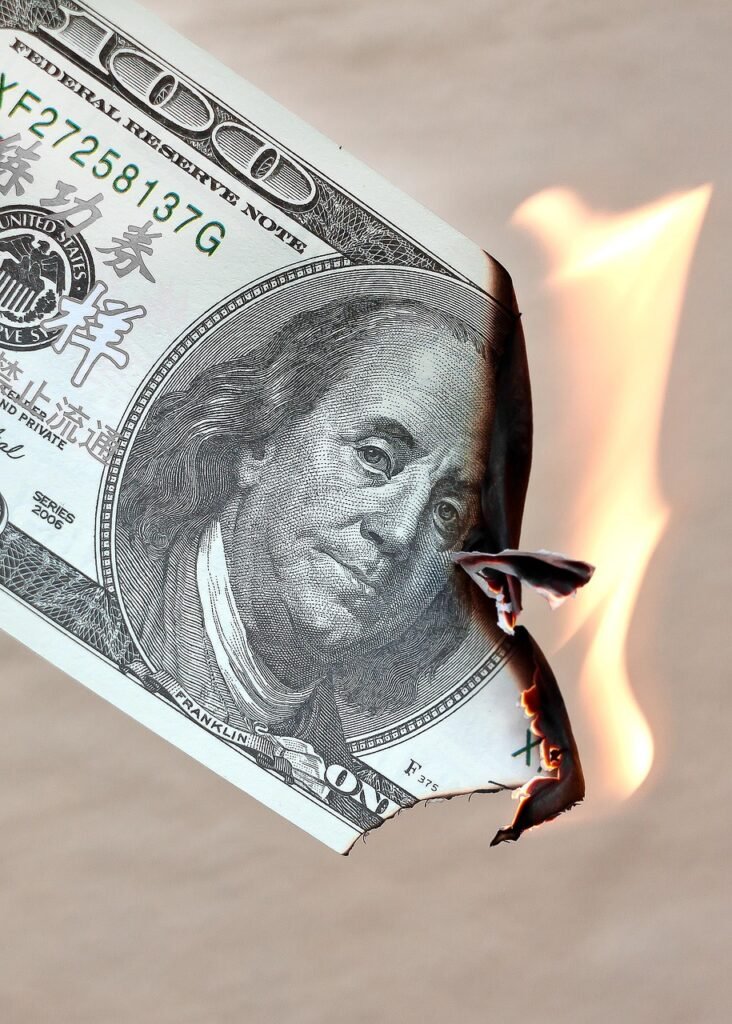
Freedoms Strength Weakens with the U.S. Dollar’s Decline
The Dollar’s Global Weakening
The U.S. dollar, once the undisputed pillar of global trade and finance, is showing unmistakable signs of decline. Over the past decade, the share of international transactions conducted in dollars has steadily fallen. According to the International Monetary Fund (IMF), the dollar’s share of global foreign exchange reserves dropped below 59% in 2024—the lowest in nearly 30 years. This trend reflects a growing global movement away from dollar-based exchanges, as nations seek to insulate themselves from U.S. monetary policy and geopolitical influence.
This shift carries profound implications. The dollar has long been a tool of American geopolitical power, enabling the U.S. to impose sanctions, control trade flows, and influence global markets. As fewer countries rely on the dollar, America’s ability to leverage its currency as a diplomatic and economic instrument weakens. The erosion of dollar dominance thus represents not just an economic challenge but a strategic one.
Deficit Spending and Fiscal Instability
The weakening of the dollar is not solely a result of external pressures—it is also driven by internal fiscal mismanagement. The U.S. government’s persistent deficit spending has undermined confidence in the dollar’s stability. As of early 2026, the U.S. national debt surpassed $34.6 trillion, with annual deficits exceeding $1.7 trillion, according to the Congressional Budget Office (CBO). When a nation continually spends more than it earns, it signals fiscal irresponsibility to global investors and foreign governments.
This excess spending fuels inflation and diminishes the dollar’s purchasing power. Countries that once viewed the dollar as a safe haven are now diversifying their reserves, fearing that America’s mounting debt will eventually devalue its currency. The result is a feedback loop: as confidence wanes, demand for the dollar falls, further weakening its global standing.
The Rise of De-Dollarization
In response to U.S. sanctions and economic dominance, countries like China and Russia have accelerated efforts to reduce their reliance on the dollar—a process known as de-dollarization. Russia, facing Western sanctions, has shifted much of its trade with China into rubles and yuan. China, meanwhile, has encouraged its trading partners to settle transactions in its own currency, the renminbi (RMB). According to the Bank for International Settlements, the yuan’s share of global payments rose to over 4% in 2025, surpassing the Japanese yen.
This movement is not limited to bilateral trade. The BRICS alliance—Brazil, Russia, India, China, and South Africa—has been exploring the creation of a shared currency to facilitate trade among member nations. At the 2023 BRICS summit, discussions centered on developing a digital or commodity-backed monetary unit that could rival the dollar in international markets. Such initiatives represent a coordinated effort to build an alternative financial system, one less vulnerable to U.S. influence.
China’s Strategic Realignment
China’s economic strategy further underscores the global pivot away from the dollar. Beijing has been steadily reducing its holdings of U.S. Treasury bills, cutting them to the lowest level in nearly 17 years. Simultaneously, China has been stockpiling gold, increasing its reserves by more than 300 metric tons in 2024 alone, according to the World Gold Council. This move reflects a deliberate effort to diversify its assets and prepare for a future where gold—and possibly silver—plays a larger role in backing its currency.
By shifting from dollar-based assets to tangible commodities, China is signaling its intent to establish a more resilient financial foundation. This strategy not only protects China from dollar volatility but also positions it as a leader in a potential new global monetary order.
The Broader Implications for Freedom and Influence
The combined effects of deficit spending, de-dollarization, and strategic realignment by global powers threaten America’s ability to project freedom and prosperity worldwide. The dollar has long been a symbol of economic liberty—a currency trusted across borders, representing stability and opportunity. As its influence wanes, so too does America’s capacity to champion freedom through economic strength.
If the dollar continues to weaken, the U.S. may find itself constrained in its ability to support allies, enforce sanctions, and promote democratic values abroad. Economic power has always underpinned political influence; without it, America’s voice in global affairs risks being diminished.
Conclusion
The decline of the U.S. dollar is more than a financial trend—it is a reflection of deeper systemic challenges. Excessive spending, mounting debt, and the rise of alternative monetary systems are eroding the foundations of American economic leadership. As nations like China and Russia forge new paths, the world edges closer to a multipolar financial order.
For the United States, preserving freedom and influence requires restoring fiscal discipline and reaffirming the dollar’s credibility. Otherwise, freedom’s strength may indeed weaken alongside the dollar’s decline, reshaping the global balance of power for generations to come.
Sources:
- International Monetary Fund (IMF) – Currency Composition of Official Foreign Exchange Reserves (COFER)
- Congressional Budget Office (CBO) – U.S. Federal Budget and Debt Reports, 2026
- Bank for International Settlements – Global Payment Statistics, 2025
- World Gold Council – Gold Demand Trends Report, 2024
- Carnegie Endowment for International Peace – BRICS Currency Initiatives, 2023
- Reuters, Bloomberg, and Financial Times – Reports on China’s Treasury Holdings and Gold Reserves